
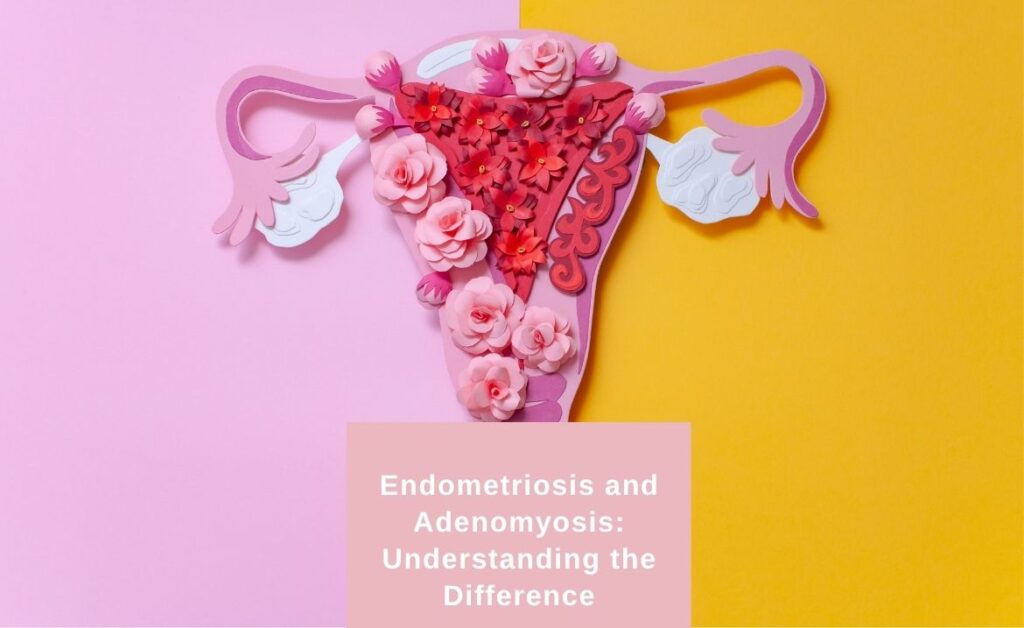
Endometriosis and Adenomyosis are like twins. Similar, yet different. They can both cause painful, life-sucking period pains and heavy bleeding (along with a tsunami of other symptoms). But while one is an introvert, the other is an extrovert.
Let us explain.
The difference between adenomyosis and endometriosis
While both endometriosis and adenomyosis affect the uterine lining, the key difference lies in where the tissue grows.
- In adenomyosis, endometrial cells grow inside the uterus walls. This causes the uterus to thicken and enlarge. Once upon a time, it was thought to affect women aged 40-49; it is now clear that it can affect younger women (including teenagers). In Australia alone, 1 in 5 females aged 30 to 50 is affected.
- In endometriosis, cells grow outside the uterus, including on organs such as the ovaries and other pelvic organs. According to the Australian Institute of Health and Welfare,1 in 7 (14%) women in Australia are diagnosed with Endometriosis by the age of 44-49, with an estimated 8.8% between the ages of 26-31 being diagnosed.
So, as you will have gathered by now, like introverts and extroverts, they both have their own personality. However, like twins, you can expect some similarities. Their symptoms often overlap and may even occur at the same time.
Without further ado, let’s look at the symptoms of both.
Signs and symptoms to take note of
Symptoms are not always clear-cut. Some women have mild symptoms. While others experience severe disruption to work, study, relationships, sleep, and mental wellbeing.
Some of the most common symptoms are as follows.
Adenomyosis
- painful periods (dysmenorrhea)
- painful sexual intercourse (dyspareunia)
- chronic pelvic pain
- abnormal bleeding (metrorrhagia) or prolonged periods
- infertility
- an enlarged uterus
Endometriosis
- painful periods (dysmenorrhea)
- painful sexual intercourse (dyspareunia)
- painful bowel movements
- painful urination (dysuria)
- pelvic pain
- fatigue, nausea, and diarrhea, especially during your period
As you can see, some of the symptoms are very similar and may overlap. Hence, it is also possible to have both at the same time. This can make diagnosis more difficult.
How can doctors tell them apart when diagnosing?
A good assessment usually starts with a detailed conversation about symptoms:
- when pain happens,
- how heavy bleeding is,
- whether sex is painful,
- whether bowel or bladder symptoms occur, and
- whether fertility is a concern.
Diagnosis is usually based on your symptoms after a careful physical examination. These include:
For endometriosis
- Ultrasound: This may provide evidence of the presence of endometrial cysts, adhesions or nodules.
- Laparoscopic surgery: The only definite way to diagnose endometriosis is by an internal examination of the abdomen and pelvic cavity via laparoscopic surgery. During this procedure, your doctor inserts a long, thin camera (laparoscope) into a small incision by the navel (belly button). Gas is pumped into the abdomen to separate the organs for better visualisation. The doctor then carefully assesses the internal area and organs of the pelvis to locate traces of endometriosis, which are then removed and sent to a pathologist to confirm the diagnosis.
- Robotic surgery: As per laparoscopic surgery, this is a minimally invasive surgical diagnostic procedure used to examine the organs inside the abdomen. However, in this scenario, your doctor sits at a console next to you and operates the system to perform the procedure
For adenomyosis
- Pelvic exam – Your doctor may carry out a pelvic exam to see if your uterus has gotten larger or is painful to touch.
- Ultrasound – Your specialist will use a transvaginal ultrasound to determine if there is a thickening of your uterine wall.
- MRI scans – Your doctor may recommend an MRI scan. This can allow your healthcare provider to get a closer look at certain areas of your uterus and any thickening or enlargement that may be present.
How are treatment options different or similar?
Treatment depends on symptoms, age, fertility goals, and personal preference. This can vary from over-the-counter medications to invasive surgery.
Here’s a quick overview of some of the common treatment options available for both.
- Pain medications – This includes Nonsteroidal anti-inflammatory drugs (NSAIDs), such as ibuprofen or Advil.
- Hormonal medications – Options such as birth control pills and hormonal intrauterine devices (IUDs) can help manage heavy menstruation.
In some circumstances, your doctor may recommend surgery. These include:
- (For adenomyosis) Adenomyomectomy – The surgery involves removing the adenomyosis from your uterine muscle.
- Hysterectomy – A hysterectomy is often the very last option. During this surgery, your specialist will remove your uterus.
Important Takeaway
Severe period pain is not something women should endure. Heavy bleeding, pelvic pain, pain with sex, bowel or bladder symptoms, or difficulty becoming pregnant are valid reasons to seek medical advice.
Knowing the difference between endometriosis and adenomyosis can help you describe your symptoms clearly, ask better questions, and advocate for care that improves quality of life.
You deserve answers, the right treatment and support while navigating this journey and reclaiming your life.
Take the first step today. Book an appointment with our team to get the answers, treatment and care you need.